Start with the product, not the machine name
Two factories can request the same hourly output and still need different fryer configurations. Product size, coating, moisture, buoyancy, breakage risk and required frying time all affect the usable belt area, oil volume and handling method. Before comparing equipment, define the product condition at fryer entry and the condition required at discharge.
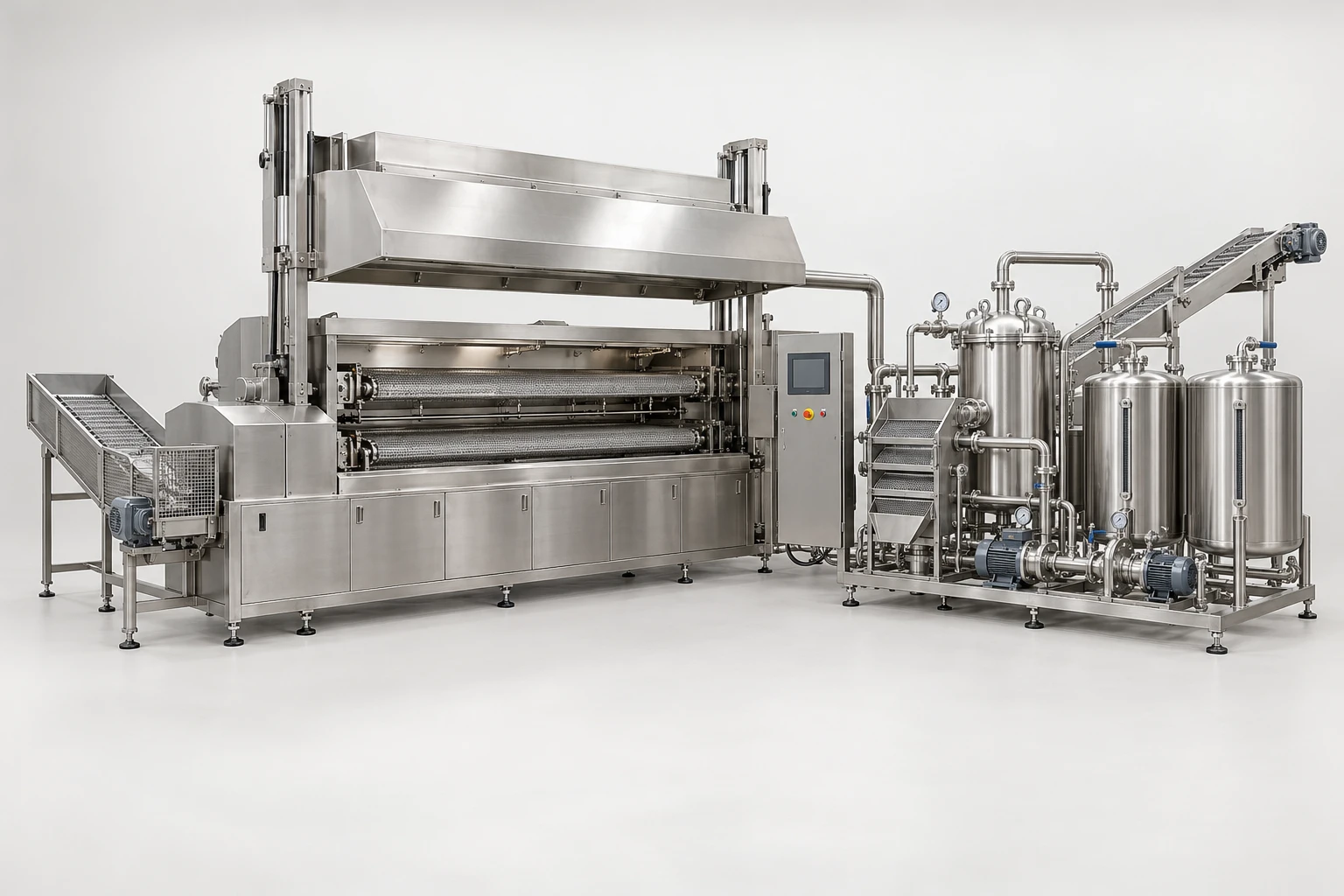
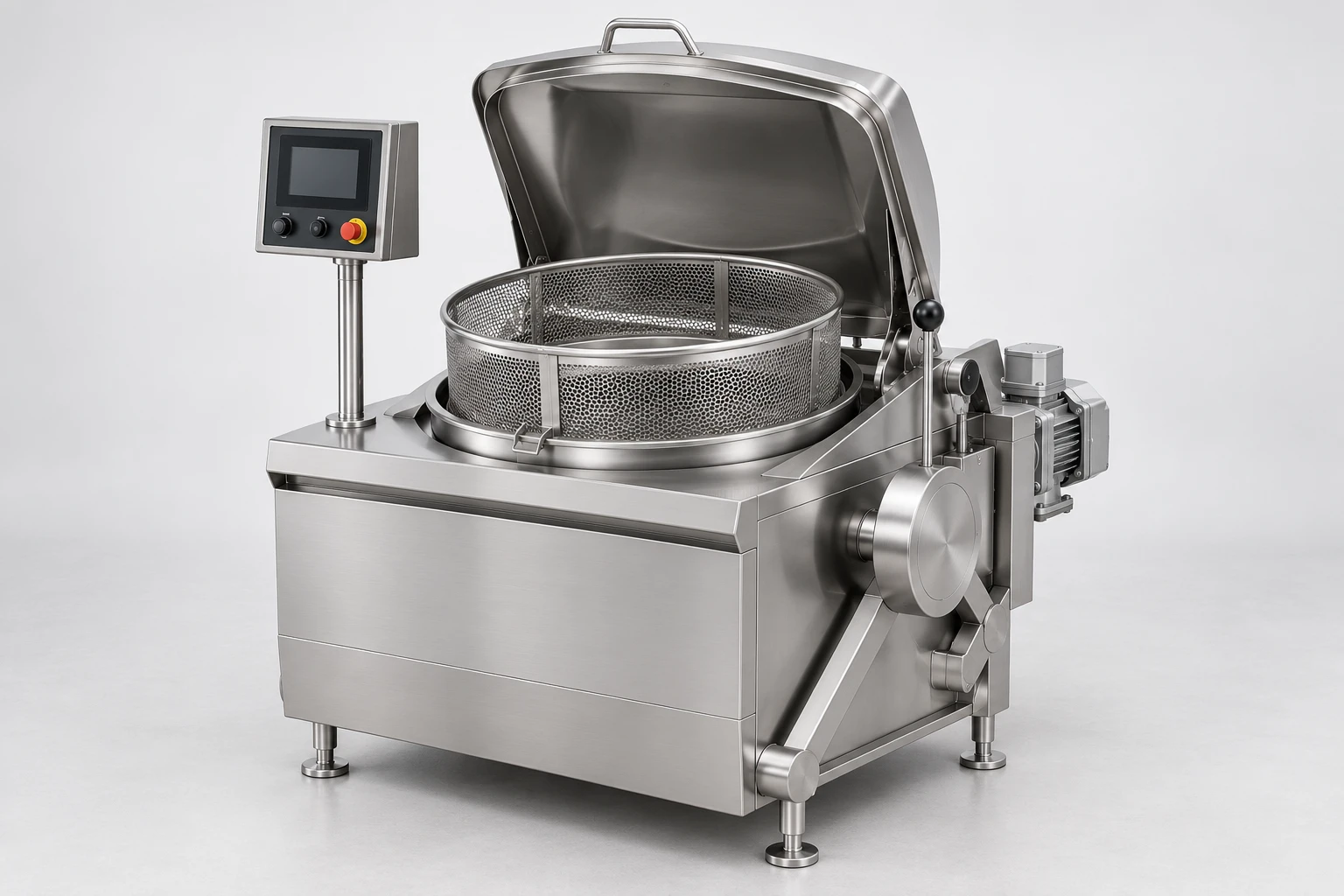
A batch fryer processes a measured load through a timed cycle. A continuous fryer receives product at a controlled rate and moves it through the oil for a set residence time. Both can be appropriate industrial solutions when matched to the process.
Batch and continuous fryer comparison
| Selection point | Batch fryer | Continuous fryer |
|---|---|---|
| Production pattern | Separate, measured batches | Steady feed and discharge |
| Product changes | Convenient for frequent recipe or flavor changes | Best when products and settings remain stable for longer runs |
| Process control | Cycle time, load weight and operator procedure are important | Feed rate, oil temperature and conveyor speed work together |
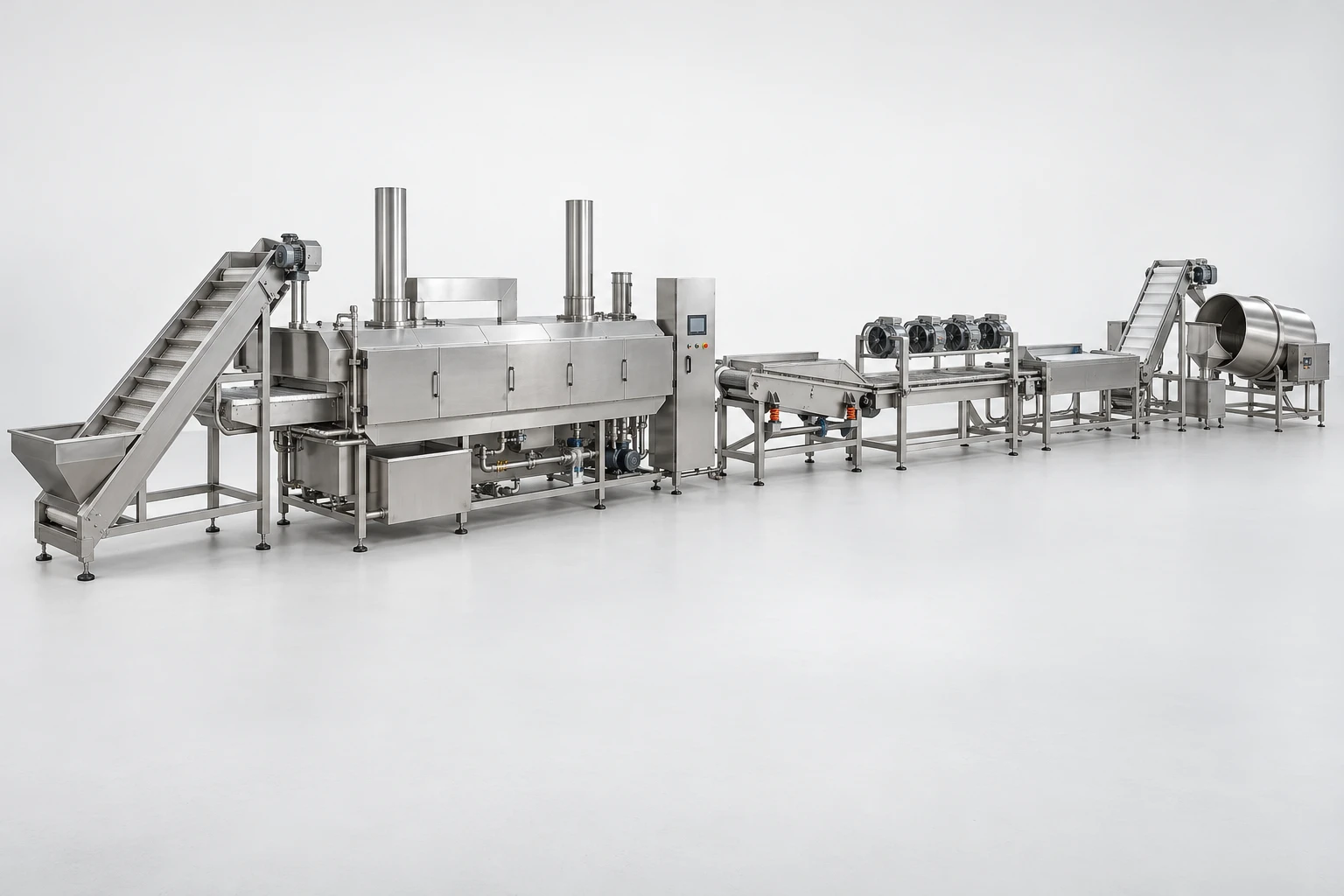
| Line integration | Can operate independently or with simple upstream and downstream equipment | Usually coordinated with feeding, de-oiling, cooling, seasoning and packing |
| Expansion | Capacity can grow by adding batches or parallel units | Capacity is engineered through belt width, frying length and line speed |
Five questions that decide the configuration
1. Is the product free-flowing and easy to convey?
Uniform chips, pellets and many prepared foods can suit continuous conveying. Floating, sticky, fragile or highly variable products may require hold-down belts, gentle agitation, special infeed devices or a batch process.
2. Is the capacity stated as raw input or finished product?
Moisture loss, coating pickup and oil uptake change the weight through the process. A useful quotation states both the measurement point and the reference product. There is no universal capacity threshold at which every factory should move from batch to continuous frying.
3. How often will recipes change?
Frequent short campaigns favor fast cleaning and flexible batch scheduling. Longer production runs can justify coordinated continuous feeding, conveyor speed control and downstream automation.
4. Which utilities are available?
Electric, gas and other project-selected heating arrangements have different power, ventilation and installation requirements. The choice should follow local utility availability, heating duty, control needs and service access rather than fuel price alone.
5. What must connect to the fryer?
De-oiling, cooling, seasoning, inspection and packing can become the true capacity limit. Define the complete process boundary before selecting the fryer body.
Information to prepare for a quotation
- Food name, dimensions, coating and condition before frying
- Target finished output and expected daily operating hours
- Required frying time and temperature from trials or the current process
- Available electricity, gas, steam, ventilation and drainage
- Workshop length, width, height and preferred material flow
- Required cleaning method, product change frequency and automation level
These inputs allow the fryer, oil system and controls to be engineered as one process. Review the nuts and legumes frying solution for an example of how batch and continuous routes can both serve the same product family.