Why residue control matters
Crumbs, starch, coating particles and product fragments remain in the oil after frying. Their amount and particle size depend on the food and preparation process. A breaded product can create a different residue load from sliced potatoes or clean nuts, so filtration equipment should be selected from actual process conditions.
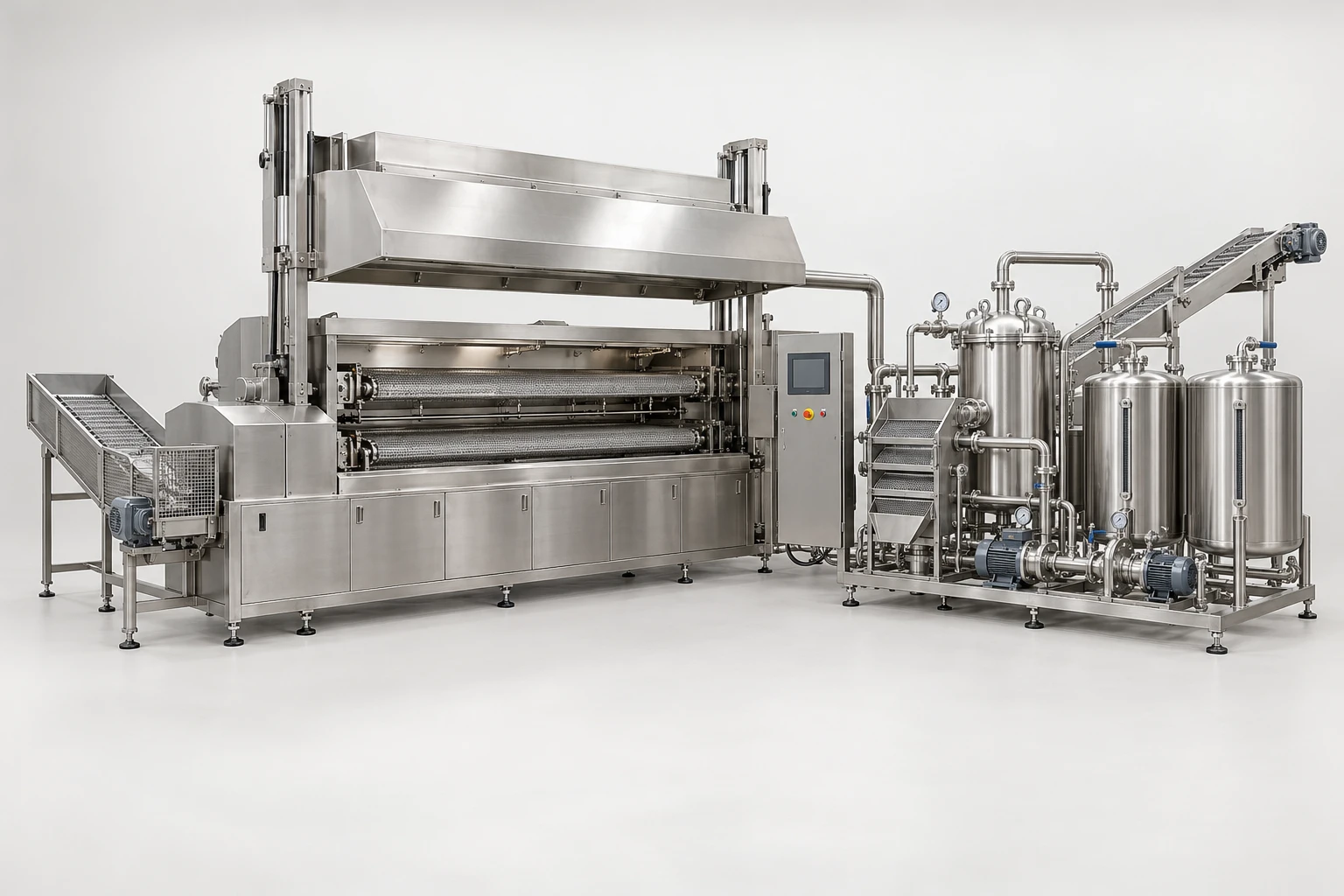
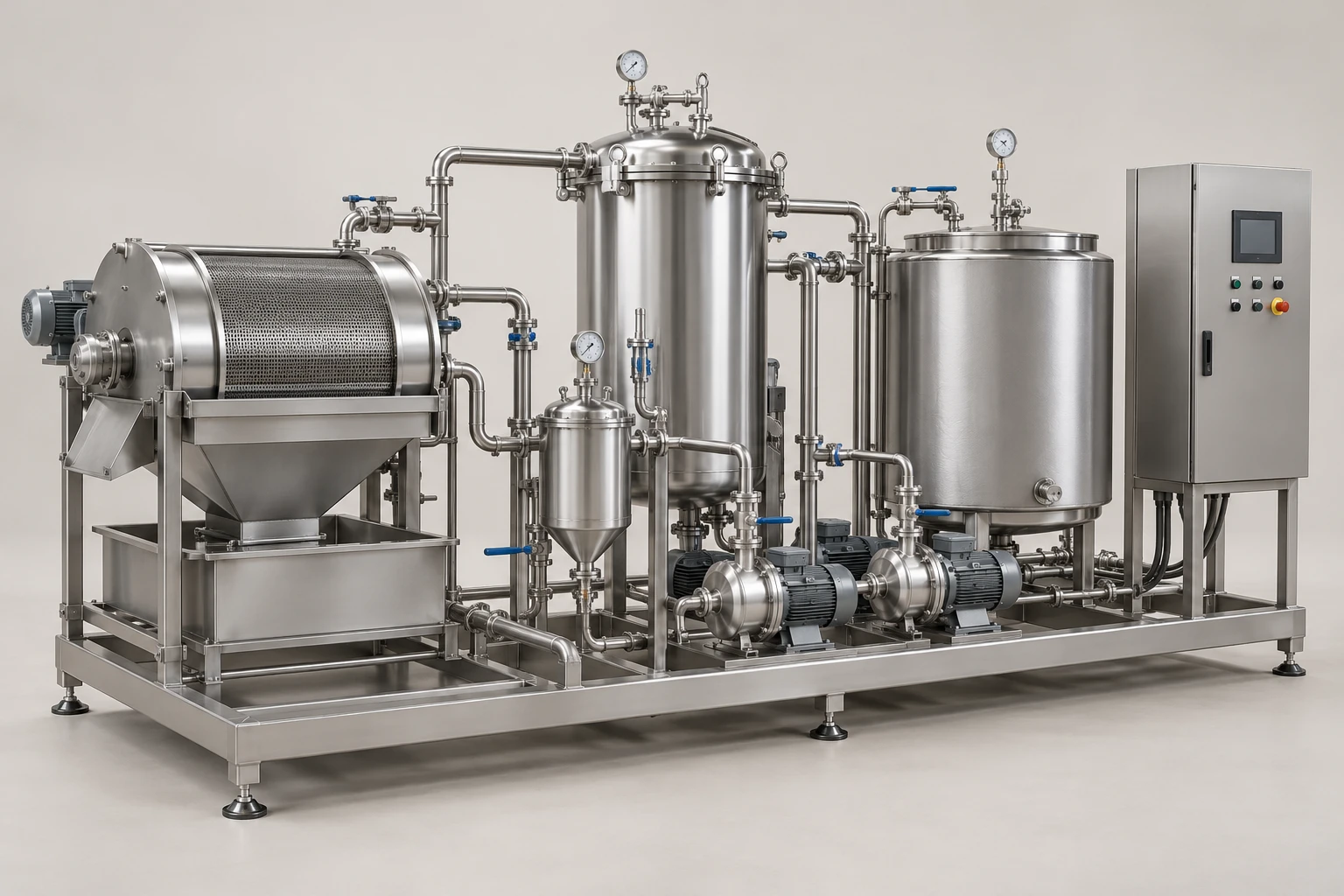
A continuous frying-oil filtration system can combine coarse screening, finer filtration, oil transfer and controlled return. The purpose is to remove process residue while maintaining stable circulation and safe oil handling. Any claim about oil life or savings should be based on the specific recipe, operating schedule and oil-quality monitoring rather than a universal percentage.
Filtration is usually a sequence
| Stage | Typical role | Selection question |
|---|---|---|
| Fryer sediment removal | Moves settled particles away from the heating and product zones | Where does residue collect inside the fryer? |
| Coarse screening | Removes larger crumbs before they circulate | What is the largest expected particle? |
| Fine or vacuum filtration | Captures smaller suspended residue according to the selected medium | What clarity and flow resistance are required? |
| Holding and transfer | Provides controlled oil storage during circulation or cleaning | What oil volume must the system safely contain? |
| Return control | Returns filtered oil at a suitable flow and temperature | How will flow integrate with fryer level and heating control? |
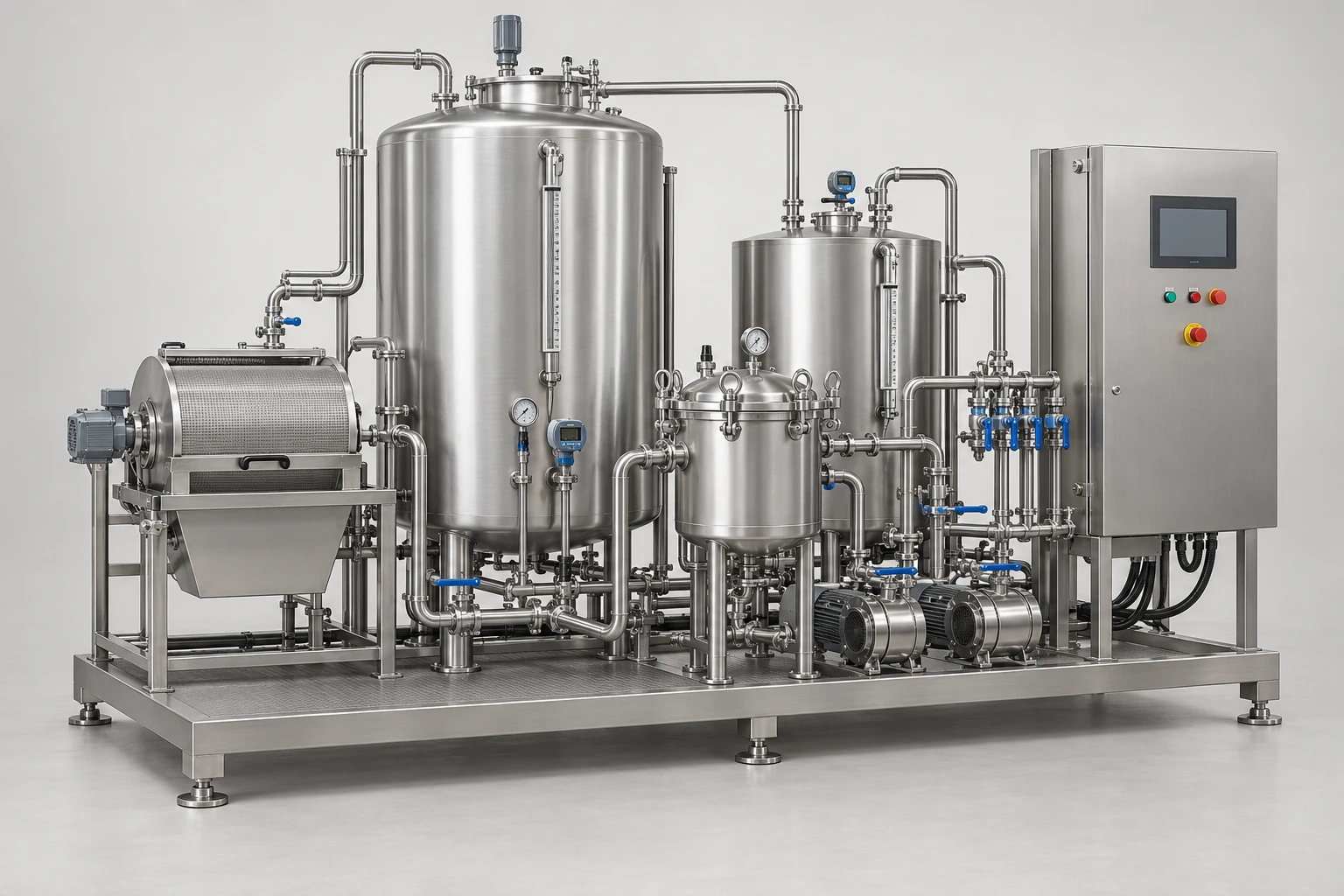
Match flow to the fryer and the product
A higher flow rate is not automatically better. The filter must process enough oil to manage residue without upsetting fryer level, temperature or product movement. Pressure drop, pump selection, piping size and oil temperature all affect the actual circulation.
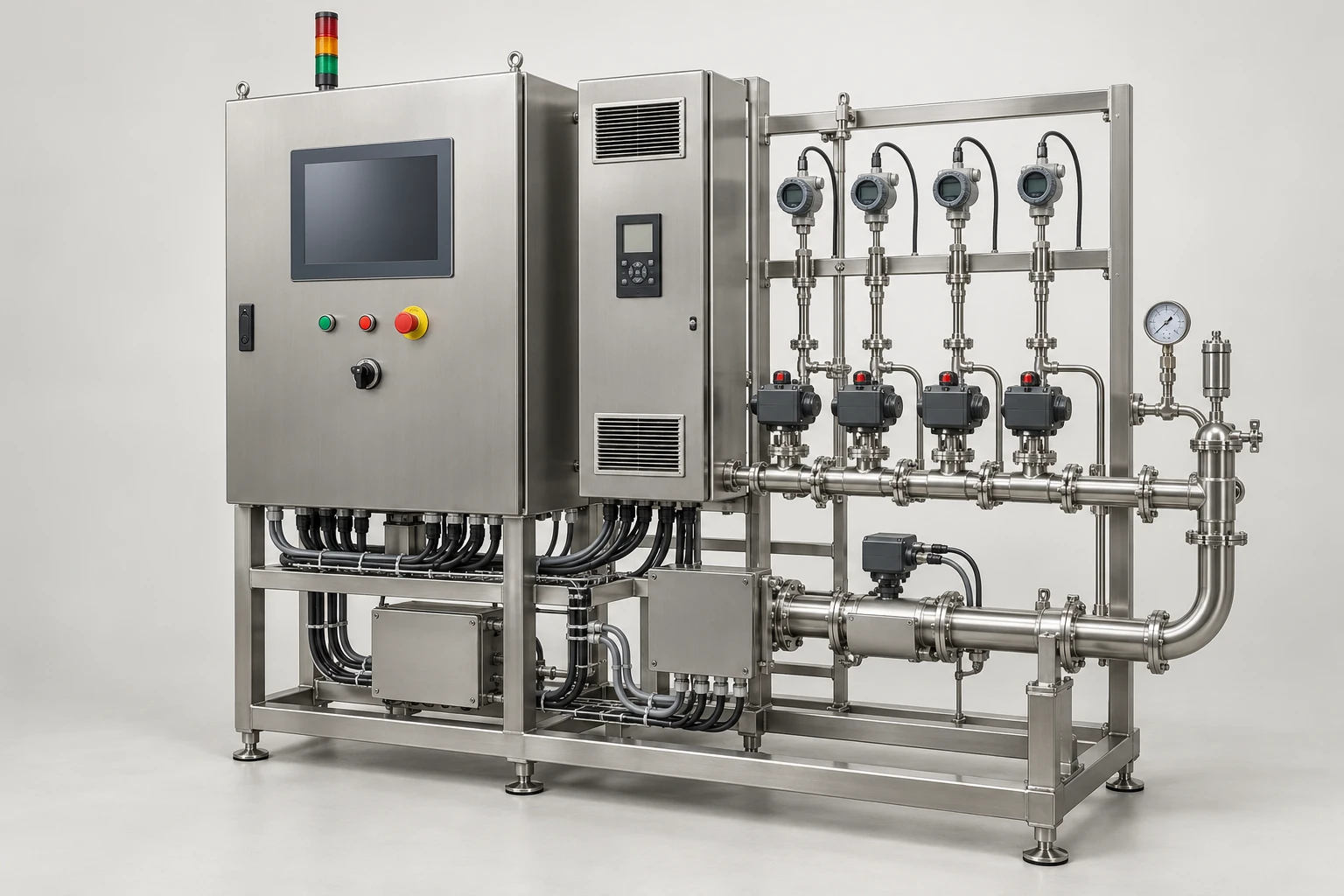
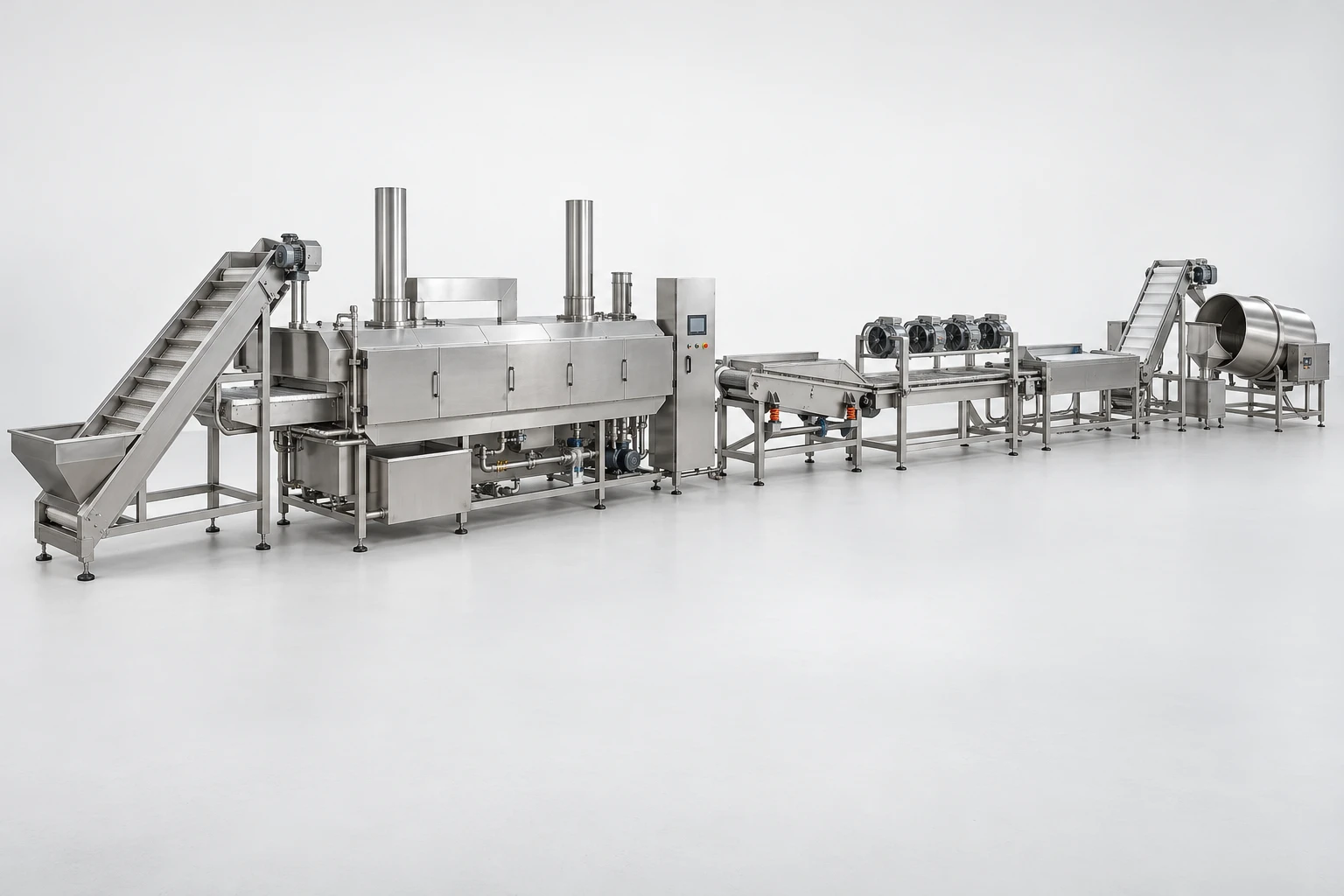
For a continuous fryer with online filtration, controls should coordinate oil level, pump operation, filter condition and heating. Batch systems may use intermittent transfer and filtration between cycles. The final arrangement depends on production hours and cleaning practice.
Design for cleaning and inspection
Operators need access to screens, filter media, tanks, valves and piping. Residue discharge should be planned so hot oil is not handled unnecessarily. The supplier also needs to know the cleaning chemicals, water restrictions and whether the plant requires dry cleaning, wet cleaning or a combined procedure.
- Provide safe isolation and drain points.
- Make screens and residue zones accessible.
- Prevent dead legs where oil and crumbs can remain.
- Coordinate filtration cleaning with the production schedule.
- Define who supplies transfer pumps, tanks and interconnecting piping.
Data needed to specify the system
Prepare the fryer oil volume, operating temperature, product type, residue description, production hours, required filtration mode and available cleaning time. Photos or samples of the residue from an existing process are especially useful. Also identify whether the project needs a standalone filter or an integrated oil management system with storage, transfer and controlled recirculation.