Define exactly what the capacity number means
Capacity should identify the product, measurement point and operating condition. Raw potatoes entering preparation, blanched strips entering a fryer and frozen French fries leaving a packing line are three different capacity references. The same applies to coated snacks, vegetables and prepared foods.
For early planning, record target raw input and target finished output separately. Then document the expected yield from preparation, moisture removal, frying and cooling. If the yield is not yet known, mark it for trials instead of converting one number into another by assumption.
Convert the recipe into equipment duty
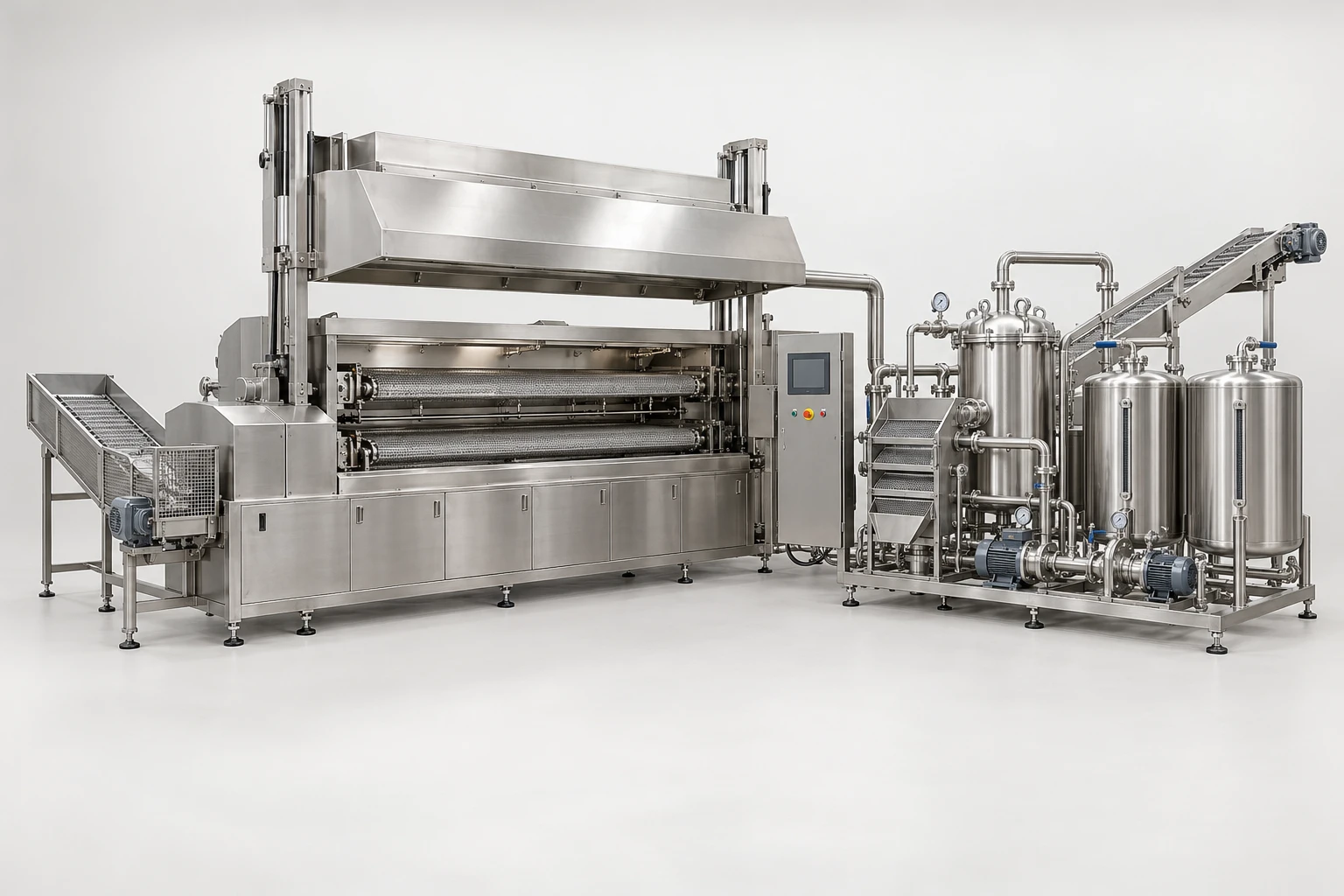
The fryer must provide enough effective frying area and heat input for the product load and required residence time. The useful inputs include piece size, layer depth, bulk density, initial moisture, coating, target moisture and the frying temperature range. Products that float or overlap may need a hold-down belt or a different loading strategy.
A capacity figure is useful only when the food, process stage and reference conditions are stated beside it.
Check every module for bottlenecks
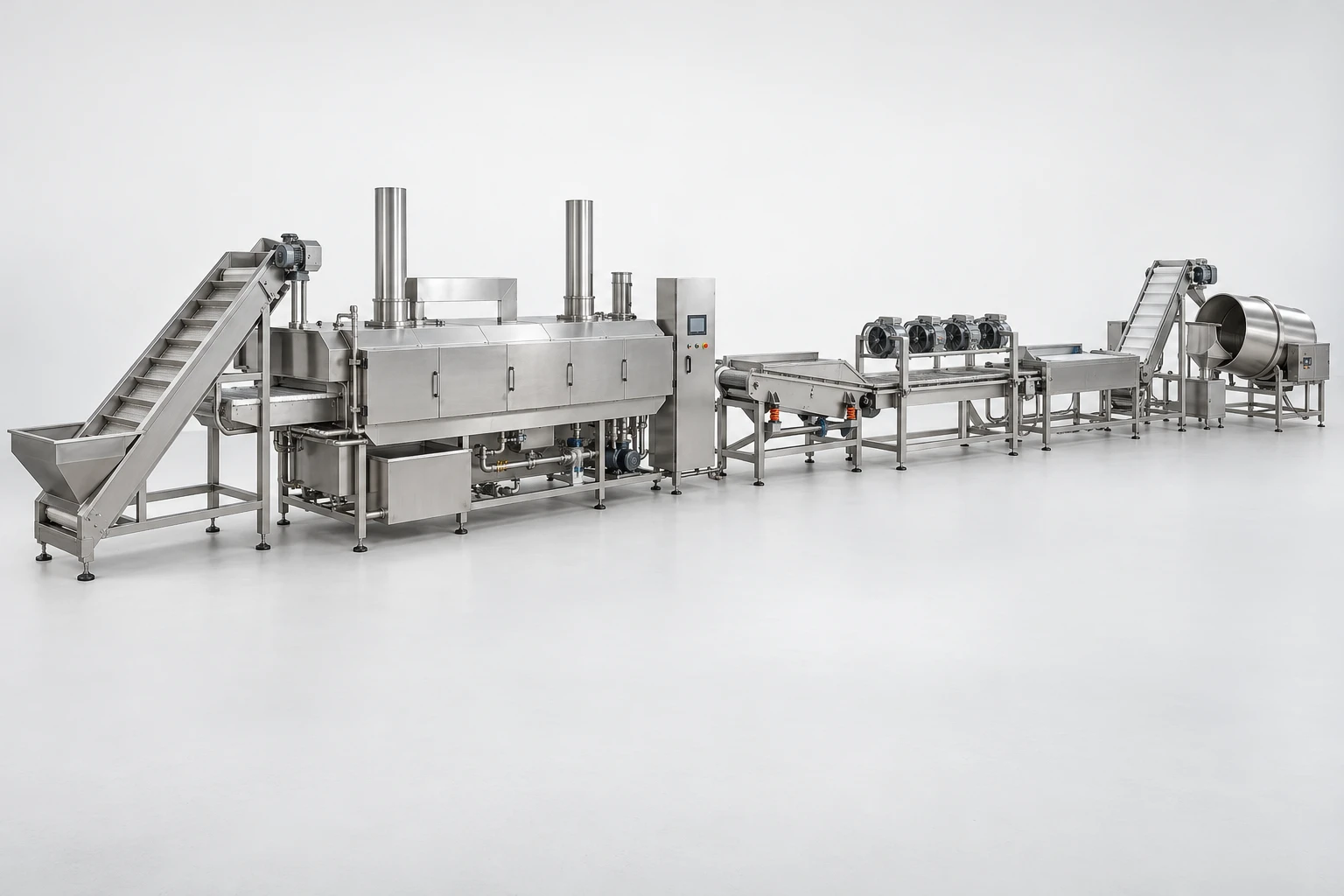
An automatic continuous frying line is a sequence of connected operations. A correctly sized fryer cannot achieve the planned output if feeding, de-oiling, cooling, seasoning or packing is smaller than the required flow.
- Preparation: washing, peeling, cutting, blanching or coating must supply a stable feed.
- Frying: belt loading, residence time, oil circulation and heating duty must suit the product.
- Oil removal: equipment must handle the product without breakage or accumulation.
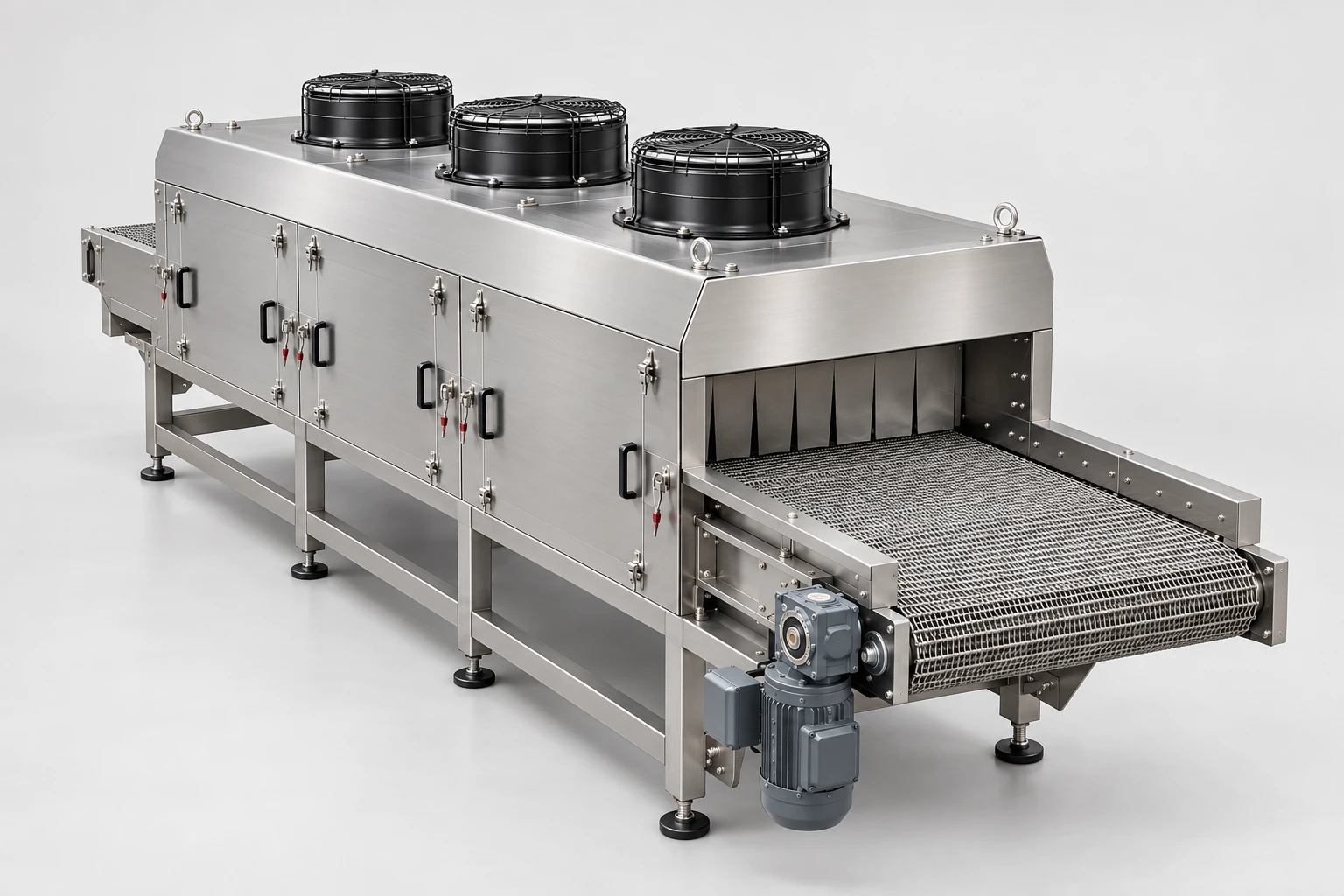
- Cooling: the product must reach a suitable temperature before seasoning or packing.
- Packing: weighers and baggers need enough combined throughput for the product and pack size.
Include factory space and utilities early
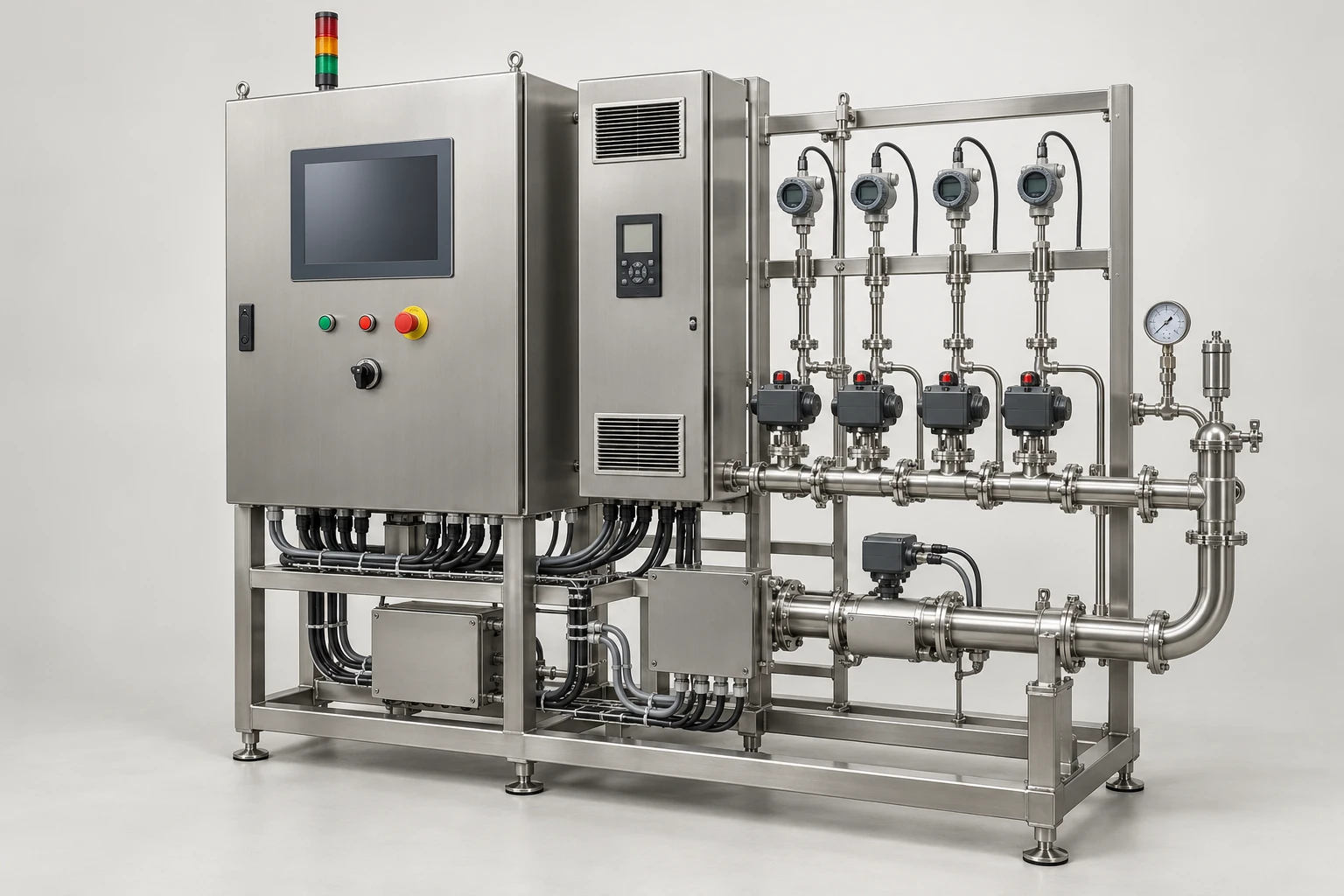
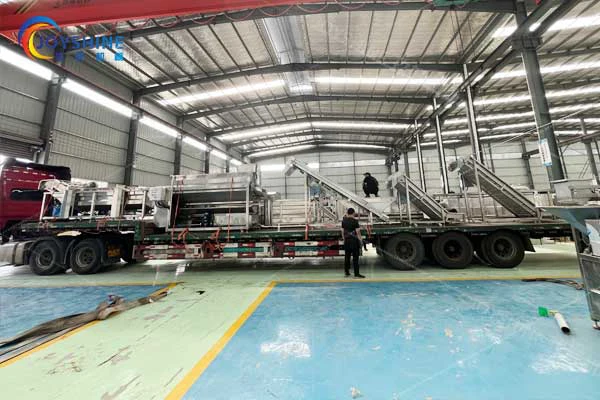
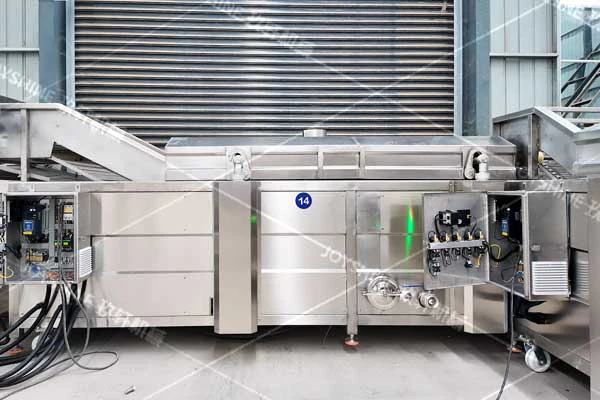
Custom equipment can be arranged around many workshop sizes, but the available length, width and clear height still affect conveyor direction, service aisles and access for cleaning. Confirm electrical supply, gas type and pressure, steam if required, ventilation, drainage, compressed air and water quality before finalizing the layout.
Do not use equipment footprint alone. The plan also needs operator space, maintenance withdrawal zones, oil handling, ingredient movement, packaging materials and safe access around hot surfaces.
Use project references correctly
The Bolivia potato chips project records 150 kg/h finished chips. The Dubai frozen French fries project records a 500 kg/h designed output. These figures describe those configurations; they are not automatic guarantees for another product or plant.
Frying-line sizing checklist
- Define the food, dimensions, recipe and product condition at every major stage.
- State raw input and finished output separately.
- Confirm frying temperature, residence time and acceptable product loading.
- List all required process modules and customer-supplied equipment.
- Provide workshop drawings or verified dimensions and utility data.
- Validate uncertain product data with trials before final manufacture.
A quotation based on this information can identify the supply boundary, likely bottlenecks and the conditions that still require confirmation.