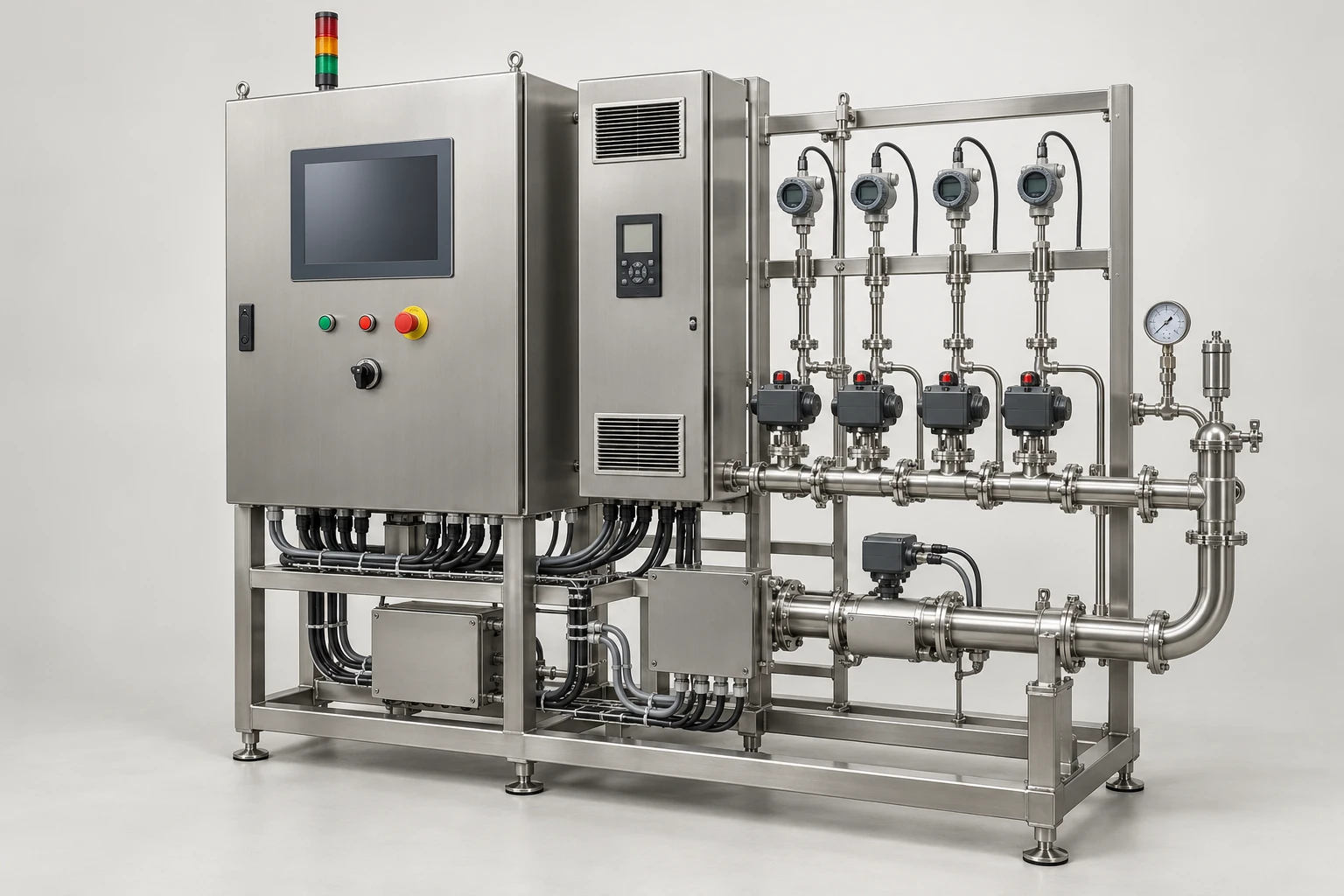
Temperature and time must be controlled together
The product absorbs heat while releasing moisture into the oil. When feed increases suddenly, the oil temperature can fall; when feed stops, the same heating input can raise temperature quickly. A stable process therefore coordinates product feed, oil temperature and residence time.
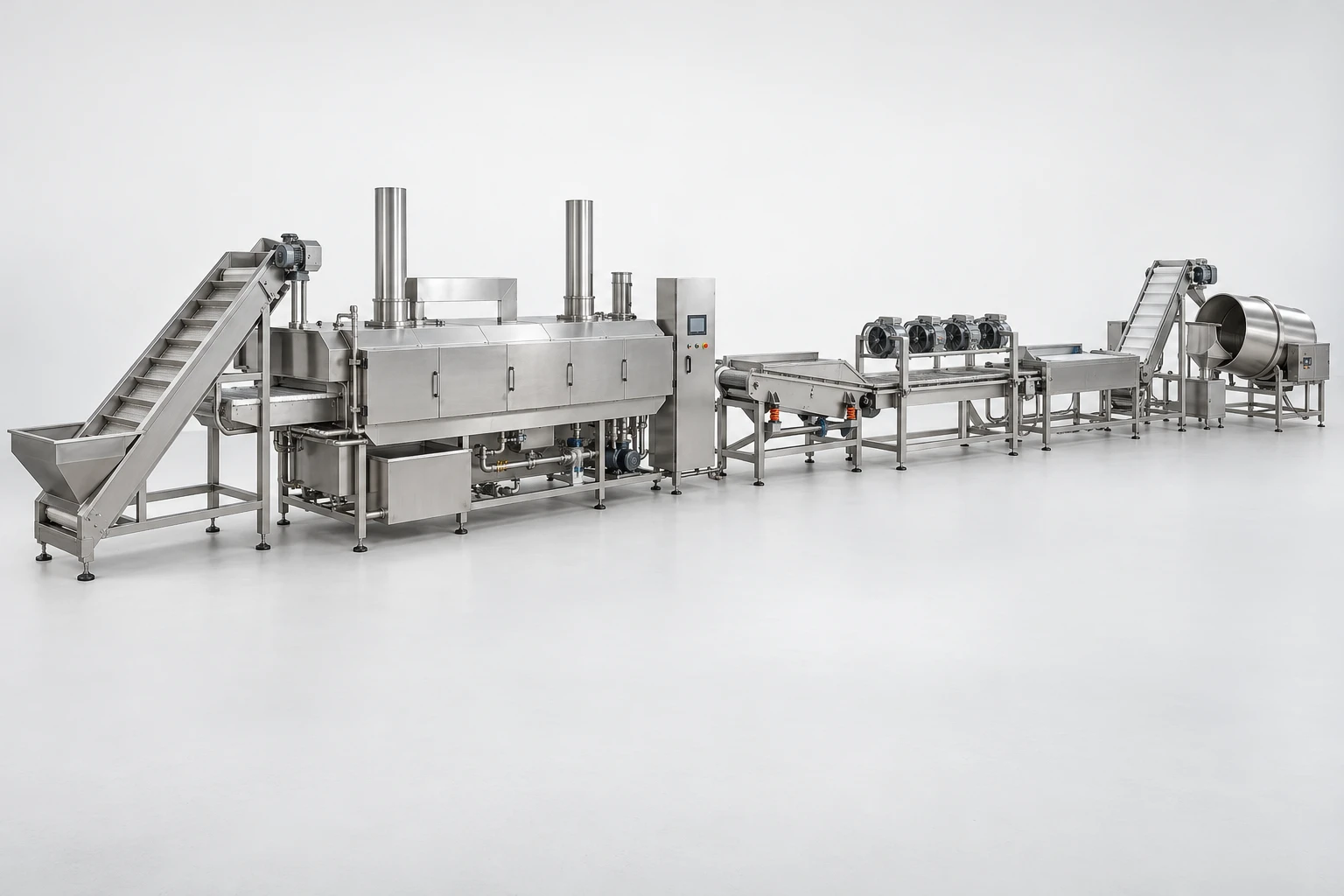
In a continuous fryer, residence time is largely set by conveyor speed and effective frying length. In batch frying, cycle time and load weight must be consistent. Neither method can be controlled well if incoming product size and moisture vary widely.
Core elements of a control system
- Temperature sensors: positioned to represent useful fryer and oil-circulation conditions.
- Heating control: adjusts electric power, burner duty or the selected heating module.
- Conveyor control: sets product residence time and coordinates infeed and discharge.
- Oil-level and circulation monitoring: supports stable operation and protects equipment.
- Recipes: store approved setpoints for defined products and operating conditions.
- Alarms and interlocks: identify unsafe temperature, stopped conveyors or abnormal oil conditions.
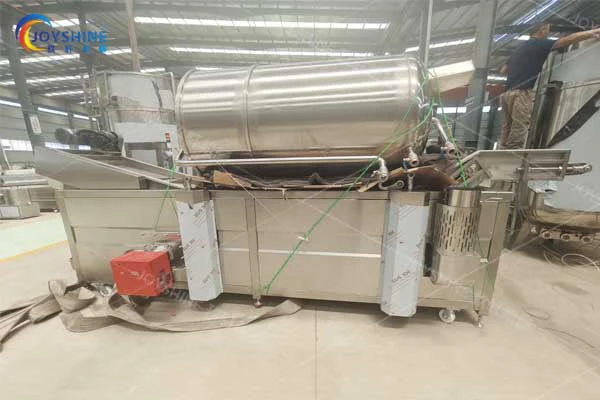
Place sensors for the real process
One sensor near the heater does not necessarily represent the oil condition around the product. Sensor quantity and position depend on fryer length, circulation arrangement and heating zones. Installation should also allow calibration and replacement without creating difficult-to-clean areas.
Respond to feed disturbances
Control cannot compensate for every upstream problem. Large changes in feed rate, product moisture or coating load can exceed the heating response or disturb oil level. The line should meter product consistently and use alarms or interlocks when upstream and downstream equipment stop.
Use recipes as controlled starting points
A fryer temperature control system can store temperature, conveyor and alarm settings. These recipes should be approved during trials or commissioning for a defined product. Operators should record changes rather than adjusting several variables at once without traceability.
Commissioning checks
- Verify sensor calibration and displayed values.
- Test conveyor speed across the intended operating range.
- Confirm heating response with oil circulation operating normally.
- Introduce product gradually and record temperature recovery.
- Check color, texture, moisture and frying time at stable conditions.
- Test alarms, interlocks and safe shutdown behavior.
Information needed for control design
Provide the product, target frying time and temperature range, planned feed rate, heating source, fryer dimensions, oil-circulation arrangement and required integration signals. For retrofit projects, include the existing electrical drawings and PLC information during technical communication; these documents do not need to be published on the website.
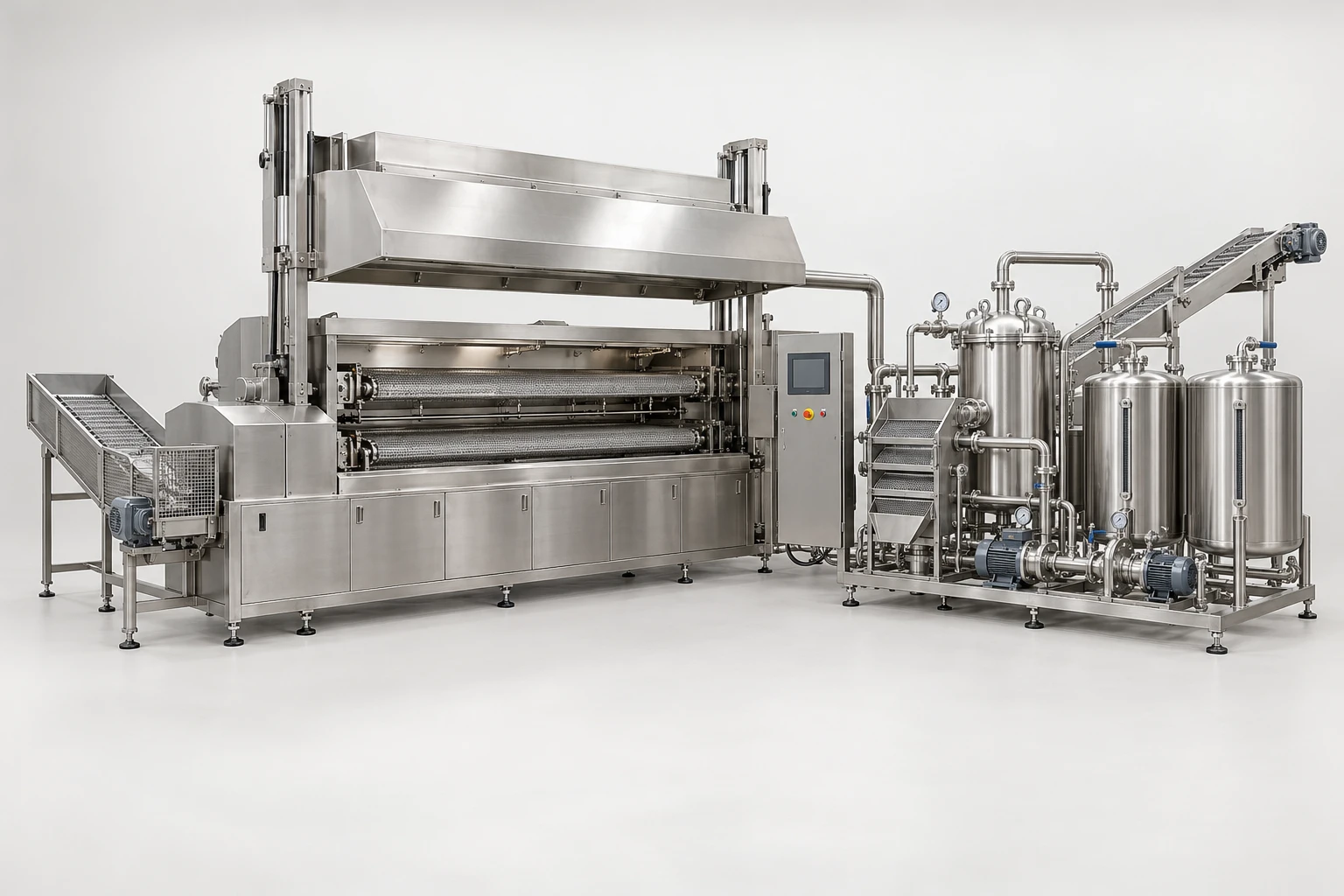
For a coordinated fryer, filtration and control package, review the continuous fryer with vacuum oil filter.